We’ve had lots of threads about the varying wedding customs and traditions across the United States. I, for one, would be extremely interested in learning about the customs and traditions in other countries. I know we have a lot of posters who are originally from somewhere else or who still reside elsewhere. Or maybe you’ve spent a lot of time overseas. Anyone willing to share?
(P.S. It would be especially fun to hear about both the mainstream traditions and customs that are considered to be in good taste and the deviations from the mainstream that are considered to be tacky!)
My mom’s family is Romani (from Hungary-ish area). I think my favorite part about their wedding traditions is that if you don’t get married in the church (many do depending on where you live), the whole wedding ceremony is just an elder saying “you’re married!” and that’s it. The Roma don’t waste time on silly ceremonies- that just takes away time from the partying!
When my grandparents married, my grandma was non-Roma (gadji) and my grandfather was Rom so they couldn’t marry in a Roma village (grandfather was banned for associating with a gadjo). When they joined a Romani community here in the US, non-Roma were welcomed with open arms but Romani customs were dominant (though highly liberalized- no child marriages like were still common in Europe for example). So my parents (my dad is not Rom) got married, they had as traditional of a Romani wedding as they could. Huge all day bash at my grandparents’ farm with pretty much every Rom in southeast Michigan attending.
The other tradition I like is that, different from most US weddings, you are supposed to wear your brightest, most lavish clothes (as opposed to the toned down ones that aren’t supposed to “take away” from the bride).
In HI, we have an unusual variant of Chinese wedding customs that I believe are no longer practiced in much of China. The groom’s family gives the bride’s family a roast suckling pig and varying wedding cake and other pastries and the bride’s family gives the groom clothes–a suit and shoes or in our case, several pairs of dress slacks, aloha shirts and shoes.
On the wedding day, at the reception (or at another date and time of the couple’s choosing), there is a tea ceremony where close relatives are invited and the couple serves tea which generally has candied fruit in it. The bride wears a gorgeous embroidered jacket and does the serving while the groom helps. The guests gift “lisee” (red envelopes with cash) or jewelry.
Not sure about other HI Chinese wedding traditions–those are the only ones I’m familiar with.
I married a Spaniard and he told me when we were planning our wedding here that it was a custom in Spain for the groom to give 13 gold coins to the bride (the tradition is known as “las arras”). It sounded like a pretty nice tradition to me so we went to a coin dealer and purchased thirteen 1/10 oz Kruggerands, which was about all we could afford at the time. I think we spent around $400 or so. They’re now worth around $1800, I think
I lived in France for a year and later attended the wedding of my family’s oldest son. They had the civil wedding on Friday at the Paris town hall, then on Saturday afternoon they had the church wedding. Instead of a wedding cake they had a croqueembouche. http://foodnetwork.sndimg.com/content/dam/images/food/fullset/2009/11/4/2/FNM_120109-Sugar-Fix-006_s4x3.jpg We spent the morning filling up the little puff pastry balls. I don’t know who did the spun caramel that sticks it all together. The wedding couple wacks it and then everyone gets a few balls. My family had a share in a local vineyard and served some wine that they had laid down 25 years earlier. It was the only time that I had that wine that it actually tasted good. Apparently a good year and aging really helped.
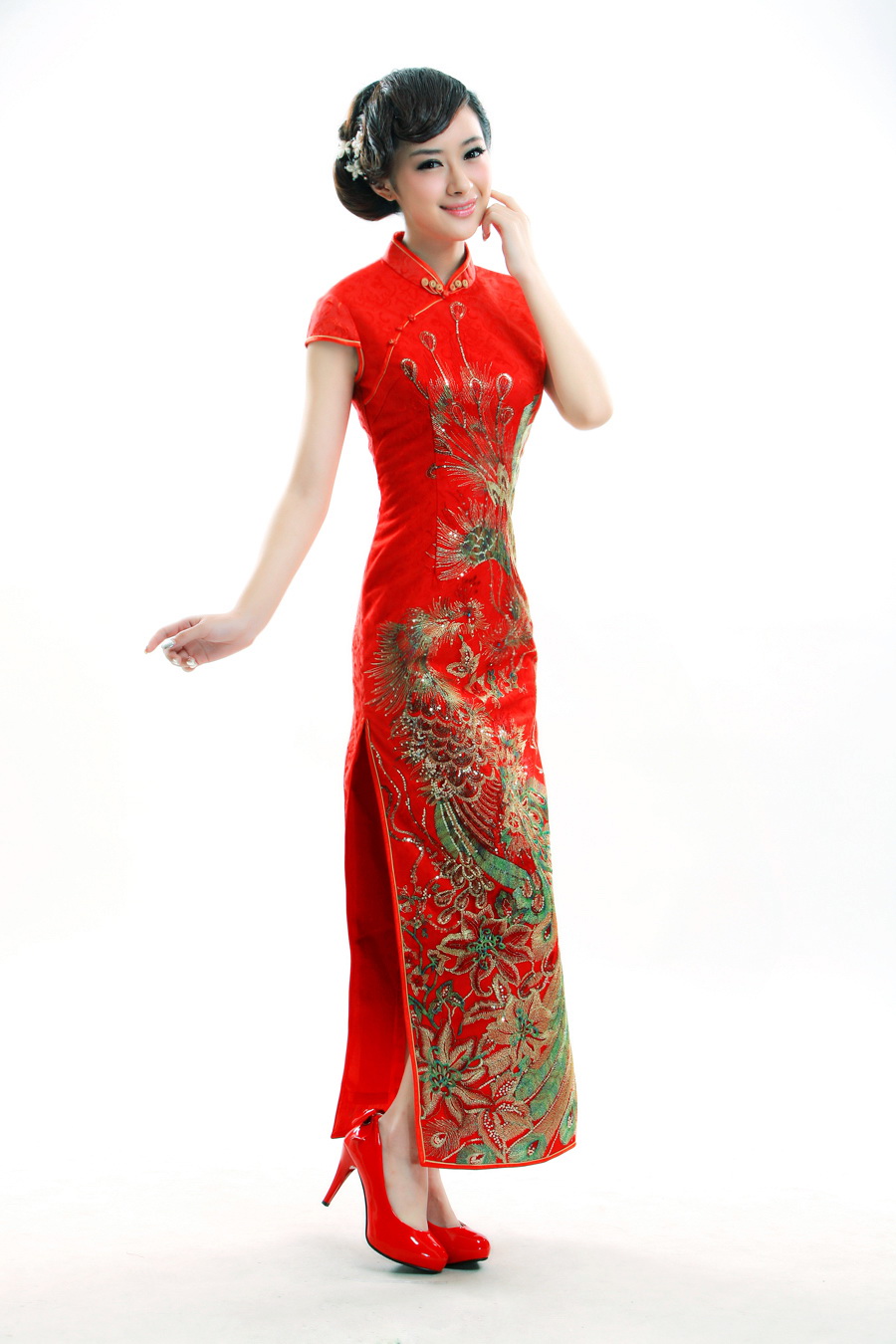
We went to a Korean/Chinese wedding a few years ago. The reception was an amazing banquet at a Chinese restaurant. Lots of courses of things I had never or only rarely seen before. The bride changed outfits twice. She arrived in her wedding gown, then changed to a Cheongsam/Qi pao style dress like this: http://www.chinatoday.com/culture/qipao/qipao-36.jpg and then finally ended up in something that looked like Cinderella’s ballgown. They did all of the tackiest Western things too - I blotted out most of them, but definitely remember the groom taking off the garter with his
Fun!! I look forward to reading this thread. I personally have not been to a wedding in another country, but my kid just came back from a wedding (her former bf’s best friend got married) in Madrid. I will ask her!
HIMom, we went to a wedding here in the US. The bride was Chinese, and the groom was Moldovan. They did the tea serving ceremony, exactly like you described.
It’s strange how Ashkenazi-Sephardic weddings are often considered intermarriage within Judaism. My Iranian boyfriend of five years recently informed me of the non-negotiability that we have a large Persian wedding. I can’t say my initial response wasn’t “nope” but after reading about the outfit changes, rosewater desserts, and saffron rice, I’m on board.
Growing up in a Jewish community, I take for granted a lot of customs that are admittedly pretty weird. It’s said that the bride wears a veil to avoid what happened to Jacob in the Torah, when he accidentally married Leah instead of Rachel. Or the yichud room, where immediately after the ceremony, the couple goes to a room where they are alone for at least 8 minutes to symbolize that while you previously weren’t allowed to be alone in case you had premarital sex, now you can!
I circled the groom seven times under the chuppah. Not typically done these days, and I lost track halfway through, just as the rabbi predicted. He laughed when he saw the look on my face as I realized I had lost count.
We didn’t have a yichud room, but a friend of mine did, and she had me come in to convert her headpiece and veil into a married woman’s cap. (I had made it for her.) I felt very strange being in the room during that time!
In olden times in Korea, the groom and his family would come to the bride’s house to marry her and take her away to their compound, sometimes to never see her family again. After the ceremony, the men of the bride’s family would string the groom up upside down by his feet then whack the bottom of his feet with bamboo canes to ‘prevent’ him from carrying the bride away.
When I was young, I saw a modern, watered down version of this being done with one of my uncles and I was so upset I burst into tears
I always liked (and adhered to) the custom that a Jewish girl gets married with a plain gold band (no precious stones on it) and that it is put on her right index finger during the ceremony (supposedly closest to her heart) and then she can switch it to the left ring finger later on. (This doesn’t preclude an engagement ring with a precious stone – just not the wedding band.)
I will say this is honored more in the breach than in the observance, IME.
Not Jewish, but my wedding band is plain. I hated my engagement ring and have switched it out for one I like better (very simple with an oval opal) that I found in my mother’s jewelry box that she gave to me a few years ago.
I just went to a Jewish wedding, and it included a number of these traditions–in this one, the bride circled the groom, the groom circled the bride, and then they circled each other. The rabbi checked both rings to make sure they were unbroken, and had another person confirm this. The groom stomped on a glass. In other respects, it was pretty modern, including vows written by the bride and groom.
I have always found the idea of a mitzvah tantz intriguing. It is an Orthodox (Hasidic) custom whereby the men dance in honor of the bride, who stands perfectly still. A man of honor – perhaps her father or grandfather – is connected to her with a thin strip of cloth. You can see an example here. All these men to feed! Oy!
My H is from India and I have been to a variety of Indian Hindu weddings in the US. Some were relatively simple ceremonies while one was a fully traditional ceremony. Festivities depend on the budget and home area. Punjabis know how to party! The venue may be a hotel or other large space.
Jain married a Hindu with a Hindu ceremony. The priest was also a physician and nicely had translations in English. There was a fun party the evening before the wedding with lots of Punjabi dancing as well as performances by the groom's side. For the ceremony the family and friends of the bride waited in the hotel lobby for the groom to arrive with his family and friends. No available elephants so the groom arrived on a white horse (from somewhere in the parking lot) with a drumbeat and lots of noise made by his side. He wore a fancy Indian tunic and a headpiece with a beaded veil. In the lobby the groom's family presented all sorts of the bride's family with monetary gifts (ending in $1- auspicious number, you often see charitable donations and money gifts of $21, $101...). Then the guests were seated in the ceremony room. There was a covered area set up in the front. Both sets of parents were up on this stage along with the groom, the bride came up the aisle wearing an elaborate sari and plenty of jewelry, including many bangles on her hennaed arms. They incorporated a few ceremonial words and actions. Then there was the reception. Rich family so many excellent appetizers- fruits, cheeses et al. Completely vegetarian except for a token meat lasagna for the meat eaters who may not have tolerated the spicy Indian food.
Religious bride married a relative of H's (Hindu by birth, not religious) whose parents were gone- some of his relatives played their role. We arrived in time for the religious puja at the bride's parents' home. This time we were part of the procession- the groom's first time on a horse! My H and son were recruited to be recipients of the bride's family gifts in the lobby. The ceremony was long , in Sanskrit and full of every symbolic gesture. This included various foods, circling one way then the other with a scarf wrapped over the couple's shoulders and a part played by the parents. H's aunt was there in the mother's spot, she knows Sanskrit and translated. Her opinion of some of the promises was also given. Duties of the bride included getting up and serving breakfast to her husband- and other things no modern woman would promise. It was fun when the aunt made her comments- laughter. After the ceremony there was the reception complete with wedding cake.
Another relative was married to a non Indian woman. They had a lovely venue. It was held in the groom's hometown, he and his bride lived hundreds of miles away, her family OOS. The day before the wedding there was a puja held at the groom's house with his side of the family and some of his friends. This was for his mother's sake. We decorated their living room that morning. Of course there was food. The ceremony was at a nice art museum- outdoors, with the reception indoors. There was a Hindu priest and the bride's Christian minister from OOS was also there but couldn't do the legal stuff. Very simple, with a few Hindu traditions as I recall. The reception was typical modern Us- Indian veg/nonveg food, cupcakes, dancing et al.
My own wedding was nonreligious except we had a hospital chaplain doing the honors (met in a doctor’s lounge, btw). We exchanged rings- neither of us like jewelry and don’t wear them anymore. H’s parents couldn’t come from India but some of his relatives living in the US were there. His aunt presented me with the black bead marriage necklace after the ceremony- never wore it (I remember it was a bit small for my large N European neck). I also never wore the red bindi on my forehead like H’s older relatives and friends do.
We were invited to a wedding in India but didn’t go. Lavish describes the Indian way of getting married. Plenty of bright colors, guests bring out their Indian finery (I only have some jewelry)- saris and other Indian dress. Family very important in the doings. A lot of symbolism with various foods and flame.
Addenda- a puja is a prayer ceremony, some do them daily, alone or with family. The Indian immigrant weddings I have attended all had buffets- practical when guests have different dietary habits. We also had a buffet- the available choices from that era in that city. The vegetarians were out of luck for protein choices as I recall- my side appreciated the roast beef, something they didn’t buy (there was probably chicken for the second entrée).
One thing I remember from my Catholic upbringing- the couple weds each other, the priest blesses things/whatever. Catholic ceremonies can be a mass or not. My Episcopalian cousin had an Episcopalian high mass- complete with communion many decades ago- I remember my mom telling me, a teen, that I could take communion. It is funny to see the pictures I took of the family all lined up- my aunt was divorced and both she and her ex’s wife wore their mink stoles.